
Topics
- Each topic has short videos, the words to learn and IELTS questions to practise.
- Watch the videos, then learn the words and test yourself.
- Plan answers to the Speaking and Writing questions. Every topic is open in the Library, and the search finds any word or question.
- Everything you save stays in this browser: no account, and nothing is marked or scored.
- Your plans stay on each topic, so you can come back and add to them.
- Clearing your browser data clears your notes too.
- Learn the words before the practice exercises: right answers fill the three dots next to each word.
- Try one Speaking question out loud after you plan it.
- The video pauses when you leave the page.



Overpopulation
Listen for these words
- population growth
- resources
- birth control
- food shortage
- demand
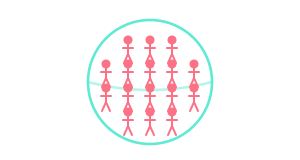
Videos
Vocabulary
population growthnoun + noun · band 7
an increase in the number of people living in a place
“Where families have many children for several generations, rapid population growth can outpace the building of new homes and schools.”
resourcesnoun · band 6
supplies of materials, money or energy that a country or group can use
“The country is rich in natural resources such as timber, coal and minerals.”
birth controlnoun + noun · band 7
methods that people use to prevent pregnancy
“Clinics that offer birth control and advice help couples plan how many children to have.”
food shortagenoun + noun · band 7
a situation in which there is not enough to eat
“If harvests cannot keep up with a growing number of mouths to feed, food shortages and rising prices may follow.”
demandnoun · band 7
the amount of a product or service that people want to buy or use
“In growing cities, high demand for rented flats pushes rents up.”
overcrowdedadjective · band 7
containing more people than there is space for
“Trains in the city centre become so overcrowded at rush hour that some passengers cannot get on.”
Also: overcrowding (noun)
depleteverb · band 8
to use up so much of something that little remains
“Intensive mining can deplete the minerals in a region within a few decades.”
Also: depletion (noun), depleted (adjective)
Similar: exhaust, use up
dwindleverb · band 7
to become smaller or fewer over time
“Fish stocks have begun to dwindle in areas where too many boats compete.”
Also: dwindling (adjective)
Similar: diminish
sustainableadjective · band 7
able to continue for a long time without harming nature or using everything up
“Many farmers now use sustainable methods that produce good harvests without damaging the soil for future years.”
Also: sustain (verb), sustainability (noun), sustainably (adverb)
water scarcitynoun + noun · band 7
a situation in which there is too little of what people drink and use for farming
“Farmers in dry regions suffer most from water scarcity, because rainfall is low and rivers are shared by many users.”
urbanisationnoun · band 7
the movement of people from the countryside into towns and cities
“Rapid urbanisation, the movement of people from villages to cities, has led to shortages of housing and transport.”
Also: urban (adjective), urbanise (verb)
consumptionnoun · band 7
the amount of something, such as food or energy, that people use
“In some countries, average meat consumption, the amount each person eats in a year, is much higher than in others, which affects how much farmland is needed.”
Also: consume (verb), consumer (noun)
distributeverb · band 7
to give out or share things among a number of people
“Aid agencies work to distribute food and clean water to families affected by floods.”
Also: distribution (noun), distributor (noun)
standard of livingnoun phrase · band 7
the level of money and comfort that people in an area enjoy
“In regions where the standard of living improves, families often gain better schools and clinics.”
finiteadjective · band 8
having a limit and not able to last for ever
“Because oil and coal take millions of years to form, supplies are finite and will eventually run out.”
deforestationnoun · band 7
the cutting down or clearing of large areas of trees
“Some farmland is created by deforestation, which destroys the habitats of many animals.”
Also: deforest (verb)
renewable energyadjective + noun · band 7
power from sources, such as sun and wind, that cannot be used up
“Solar panels and wind turbines are ways of producing renewable energy without burning coal or oil.”
crop yieldsnoun + noun · band 7
the amount of food that farmers harvest from their land
“Better seeds and irrigation can increase crop yields on land that is already farmed.”
Speaking Part 1
- How often do you spend time in crowded places like markets or bus stations?
- How would you feel about living somewhere much less crowded?
- Which do you prefer, a busy city street or a quiet village lane?
- What’s the best thing about the neighbourhood you currently live in?
- Who usually shares your home with you at the moment?
Speaking Part 2
You should say:
- where this place is
- why so many people go there
- how the crowds affect daily life there
and explain what you think could be done about it
Speaking Part 3
- In what ways does a fast-growing population help a country, and in what ways does it hold it back?
- Why do richer countries tend to worry less about population growth than poorer ones do?
- How does the number of children in a family today compare with your grandparents' time?
- What should governments do to make sure housing and food reach everyone as numbers rise?
- How do you think the size of the world's population will change over the next fifty years?
- What changes happen to the way people treat each other when an area becomes crowded?
- How should couples today weigh family size against the pressures of a growing population?
- Do you think the world has too many people?
- How can resources be shared more fairly?
Writing Task 2
- The world's population is growing rapidly. What problems does this cause, and what solutions can you suggest?
- Opinion: Across various societies, family sizes have been falling, and couples increasingly choose to have fewer children than earlier generations. While this shift may be viewed as beneficial by certain observers, others regard it as harmful. Do you consider this trend to be a positive or negative development?
- Discuss both views: Rapid population growth in some regions puts pressure on housing, jobs and public services. Some people believe stronger official measures are needed to slow this growth, while others argue that population size should be left to personal decisions and natural economic change. Discuss both views and give your own opinion.
- Advantages and disadvantages: In some countries, urban populations are growing very quickly, leading to overcrowded housing and strained services. What are the advantages and disadvantages of living in such densely populated cities?
- Problem and solution: As populations expand, the need for food and safe water rises even as usable farmland declines. Which difficulties are likely to result, and which solutions could governments and other groups introduce?
- Two-part question: Large numbers of young adults are leaving farming villages for crowded cities. Why is this happening, and is the trend mostly helpful or harmful for the villages they leave behind?