
Topics
- Each topic has short videos, the words to learn and IELTS questions to practise.
- Watch the videos, then learn the words and test yourself.
- Plan answers to the Speaking and Writing questions. Every topic is open in the Library, and the search finds any word or question.
- Everything you save stays in this browser: no account, and nothing is marked or scored.
- Your plans stay on each topic, so you can come back and add to them.
- Clearing your browser data clears your notes too.
- Learn the words before the practice exercises: right answers fill the three dots next to each word.
- Try one Speaking question out loud after you plan it.
- The video pauses when you leave the page.



Lab-grown meat
Listen for these words
- lab-grown
- cell
- livestock
- protein
- ethical
Videos
Vocabulary
lab-grownadjective · band 7
made artificially from a tiny sample of living tissue instead of from a whole creature
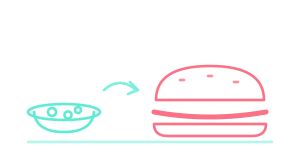
“The first lab-grown burger, made from cells that multiplied in a dish, was cooked and tasted in public over a decade ago.”
cellnoun · band 6
the tiny basic unit that all living things are built from
“Production begins when a few cells are taken from a living animal and left to divide again and again.”
livestocknoun · band 7
cows, pigs, sheep and similar creatures raised for food or for products such as milk
“Feeding livestock can use a great deal of land and water, so some researchers look for alternatives.”
proteinnoun · band 6
a substance in food, found in eggs, fish and beans, that the body uses to build muscle
“Athletes often eat extra protein to help their muscles recover after exercise.”
ethicaladjective · band 7
connected with what is morally right or wrong
“Philosophers have long debated whether it is ethical to kill animals for food, since animals can suffer.”
Also: ethics (noun), ethically (adverb)
Similar: moral
animal welfarenoun + noun · band 7
the standard of care and living conditions given to creatures kept by people
“Campaigners say that growing meat from cells could improve animal welfare, because fewer animals would live in crowded sheds.”
sustainableadjective · band 7
able to continue for a long time without seriously harming the environment
“As the world's population grows, many experts doubt that eating meat at today's levels is sustainable for the planet.”
Also: sustain (verb), sustainability (noun), sustainably (adverb)
carbon footprintnoun + noun · band 7
the amount of harmful gas that a person, product or activity puts into the air
“A person who flies less and eats less red meat tends to have a smaller carbon footprint.”
meat substitutenoun + noun · band 7
a food made to be eaten instead of the flesh of cows, pigs or chickens
“Burgers and sausages made from peas or soya are often sold as meat substitutes to shoppers who want to eat less meat.”
mass productionnoun + noun · band 7
making huge numbers of identical goods in factories
“Most experts expect prices to fall only once the technique is ready for mass production.”
livelihoodnoun · band 8
the way a person earns the money needed for daily life
“Many cattle farmers fear that falling meat sales could destroy their livelihoods and leave their families without an income.”
unnaturaladjective · band 7
made or done by people in a way that seems strange and not normal
“Some shoppers dislike the idea of growing food in a lab because it feels unnatural.”
Similar: artificial
reluctantadjective · band 7
not keen to do something and slow to agree to it
“Many people are reluctant to try unfamiliar food because they worry about how it will taste.”
Also: reluctance (noun), reluctantly (adverb)
Similar: unwilling, hesitant
consumer demandnoun + noun · band 7
how strongly ordinary buyers want a particular thing
“Producers will only invest in the technique if there is enough consumer demand for the finished product.”
food securitynoun + noun · band 8
having a steady supply of enough to eat for everyone
“Growing more of its own grain can improve a nation's food security, since it then depends less on imports.”
long-term effectsadjective + noun · band 7
results that only appear after many years
“Doctors say more research is needed before the long-term effects of eating the product on human health are clear.”
regulateverb · band 7
to control something with official rules
“Officials will need to regulate how the product is labelled and sold so that shoppers know what they are buying.”
Also: regulation (noun), regulatory (adjective)
Similar: control
affordableadjective · band 7
not too expensive for ordinary people to pay for
“Experts say the product must become affordable before most households can buy it regularly.”
Also: afford (verb), affordability (noun)
Similar: reasonably priced
cultivateverb · band 8
to look after living things so that they develop and increase in number
“Scientists cultivate the cells in a nutrient-rich liquid so that they multiply and form tissue similar to muscle.”
Also: cultivation (noun), cultivated (adjective)
Speaking Part 1
- How do you feel about eating meat that has been grown in a lab?
- Would you like to try a protein source that is made without raising animals?
- Which do you prefer, buying food from local farms or from large supermarkets?
- What do you like most about tasting dishes from other countries?
- Would you try lab-grown meat if it were available?
Speaking Part 2
You should say:
- what the food is and what it is made from
- how scientists produce it
- why this development caught your attention
and explain how you would feel about including it in your diet
Speaking Part 3
- Why has interest in meat produced from animal cells grown in tanks increased in recent years?
- Should affordable lab-grown protein be available to everyone, regardless of income?
- Which groups—governments, food companies or shoppers—ought to set rules for cell-based meat?
- How do attitudes toward farm animals and meat differ between wealthy and poorer societies?
- What could be gained and lost if lab-grown meat became a normal part of diets?
- Why do city residents sometimes show more curiosity about cell-cultured foods than rural communities?
- How do views on traditional farming differ between grandparents and teenagers today?
- Would you try meat that was grown in a laboratory?
- Why are some people unwilling to eat new kinds of food?
Writing Task 2
- Meat grown in laboratories could replace traditional farming. What are the advantages and disadvantages of this?
- Opinion: Scientists can now produce meat by cultivating animal cells in industrial containers rather than raising livestock. Some people point to reduced land requirements, while others have concerns about food safety, affordability and effects on farming communities. Do you think the growth of this industry is a positive or negative development?
- Discuss both views: Some people believe cell-cultured meat can make food supplies more secure, while others fear it will harm rural farming communities. Discuss both views and give your own opinion.
- Advantages and disadvantages: Restaurants in some cities have started serving burgers made from animal cells grown in steel tanks. What benefits and problems could this new kind of food bring?
- Problem and solution: Many shoppers remain suspicious of meat produced from cultured cells, and some stores struggle to sell it. What has caused this distrust, and what steps could increase public confidence?
- Two-part question: Meat grown from cells uses far less land than raising cattle, yet it is often more expensive. Why is it costly to produce, and how might its price change in the future?