
Topics
- Each topic has short videos, the words to learn and IELTS questions to practise.
- Watch the videos, then learn the words and test yourself.
- Plan answers to the Speaking and Writing questions. Every topic is open in the Library, and the search finds any word or question.
- Everything you save stays in this browser: no account, and nothing is marked or scored.
- Your plans stay on each topic, so you can come back and add to them.
- Clearing your browser data clears your notes too.
- Learn the words before the practice exercises: right answers fill the three dots next to each word.
- Try one Speaking question out loud after you plan it.
- The video pauses when you leave the page.



Carbon offsets
Listen for these words
- carbon offset
- emissions
- plant trees
- footprint
- greenwashing
Videos
Vocabulary
carbon offsetnoun + noun · band 7
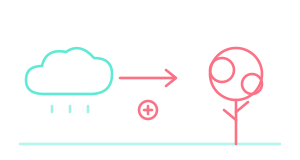
a payment to a project, such as a forest scheme, that is meant to cancel out pollution produced somewhere else
“Many travellers now buy carbon offsets to cancel out the pollution caused by their flights.”
emissionsnoun · band 7
gases and other substances sent out into the air by vehicles, factories and power stations
“Strict limits on vehicle emissions were introduced after smog covered the city for several weeks.”
Also: emit (verb), emission (noun)
plant treesverb + noun · band 6
to put young saplings into the ground so that a forest can grow
“Instead of changing how they operate, some firms pay villagers in distant countries to plant trees on bare hillsides.”
carbon footprintnoun + noun · band 7
the total amount of greenhouse gases produced by the activities of a person or company
“Someone who flies abroad several times a year usually has a much bigger carbon footprint than a neighbour who travels by train.”
greenwashingnoun · band 8
making a business or product seem much kinder to nature than it really is
“The advert showed green fields and wind turbines, but critics called it greenwashing because the company's main business still burnt coal.”
Also: greenwash (verb)
make up forphrasal verb · band 7
to balance a loss or fault by giving something good in return
“Some companies hope that a generous donation to a forest charity will make up for years of heavy pollution.”
greenhouse gasnoun + noun · band 6
a substance in the air, such as methane, that traps heat around the Earth
“Carbon dioxide is the best-known greenhouse gas, one of several that trap heat in the atmosphere.”
fossil fuelsnoun + noun · band 6
coal, oil and natural gas, which are burnt for energy and formed from ancient life
“Many power stations still burn fossil fuels such as coal and gas to produce electricity.”
net zeroadjective + noun · band 7
a balance in which the greenhouse gases released equal the amounts taken out of the air
“Several countries have promised to reach net zero by the middle of this century, balancing what they release with what they remove.”
absorbverb · band 7
to take in a substance, such as a gas or a liquid, and hold it
“Growing forests absorb carbon dioxide from the air, which is why tree-planting schemes are popular.”
Also: absorption (noun), absorbent (adjective)
loopholenoun · band 7
a gap or weakness in rules that lets people avoid what the rules were meant to achieve
“Because the rules are vague, loopholes in the system allow some projects to claim credit for forests that were never going to be cut down.”
licence to pollutenoun phrase · band 8
permission, in effect, to keep harming the air and water as long as a payment is made
“Critics say that paying for offsets works like a licence to pollute, because rich companies can carry on as long as they pay.”
a drop in the oceanidiom · band 7
an amount too small to make any real difference to a very large problem
“Planting a few thousand trees is just a drop in the ocean compared with the amount of fuel burnt every day.”
voluntaryadjective · band 6
done by choice, not because a rule or law forces it
“The extra payment to offset a flight is usually voluntary, so passengers decide for themselves whether to add it.”
Also: voluntarily (adverb)
Similar: optional
verifyverb · band 7
to check carefully that something is true or correct
“Independent experts should verify whether the new forests really exist and are still standing.”
Also: verification (noun), verifiable (adjective)
Similar: confirm
surchargenoun · band 7
an extra amount of money added to a price for a particular reason
“Airlines sometimes add surcharges to ticket prices when the cost of fuel suddenly rises, and passengers have no choice but to pay them.”
cut back onphrasal verb · band 6
to use or do less of something
“Many families have decided to cut back on meat and long flights to protect the climate.”
Similar: cut down on
Speaking Part 1
- Which do you prefer, walking short trips or riding a motorbike?
- What do you like most about the green spaces near where you live?
- Who usually reminds you to switch off lights and fans at home?
- Do you ever pay a little extra for products that are kinder to nature?
- Have you ever paid to offset the carbon from a flight?
Speaking Part 2
You should say:
- what the habit was
- why you decided to change it
- how easy or difficult it was to keep going
and explain how you felt about the change once it became normal for you.
Speaking Part 3
- What would happen if every company had to pay for the pollution it creates?
- How could a city reduce the amount of rubbish its households throw away each week?
- Do people exaggerate how much difference their own small daily choices make to the planet?
- Is it better to spend money protecting an existing forest than to plant new trees?
- What has caused so many shoppers to look for eco-friendly labels on products recently?
- Should wealthier nations carry a larger share of the cost of environmental clean-up than poorer ones?
- Which groups do you think should help adolescents learn to care for nature?
- Would you pay extra on a flight ticket to help the environment?
- Is planting trees enough to fix pollution?
Writing Task 2
- Companies can pay for trees to be planted to make up for their pollution. Is this a real solution or just an excuse?
- Opinion: Many air passengers pay a small extra charge when booking, intended to support tree planting or renewable energy projects, and feel less concerned about the environmental impact of flying. Do such payments truly neutralise the damage caused by air travel? To what extent do you agree or disagree?
- Discuss both views: Carbon offset schemes let people hand money to a company instead of cutting their own emissions. Some see this as a practical response, while others see it as a way of dodging real change. Discuss both views and give your own opinion.
- Advantages and disadvantages: A growing number of firms buy carbon offsets to counter their emissions and market themselves as eco-friendly. Does this practice bring more benefits or more drawbacks? (What are the advantages and disadvantages?)
- Problem and solution: Some companies exaggerate their green credentials, so shoppers struggle to tell honest claims from empty ones. What problems does this cause, and which measures, and by whom, could reduce it?
- Two-part question: Many young people now pay extra for goods made without harming forests or rivers. Why has this become popular, and does this shift in spending do more good than harm?