
Topics
- Each topic has short videos, the words to learn and IELTS questions to practise.
- Watch the videos, then learn the words and test yourself.
- Plan answers to the Speaking and Writing questions. Every topic is open in the Library, and the search finds any word or question.
- Everything you save stays in this browser: no account, and nothing is marked or scored.
- Your plans stay on each topic, so you can come back and add to them.
- Clearing your browser data clears your notes too.
- Learn the words before the practice exercises: right answers fill the three dots next to each word.
- Try one Speaking question out loud after you plan it.
- The video pauses when you leave the page.



Cloning
Listen for these words
- clone
- DNA
- stem cell
- ethical
- experiment
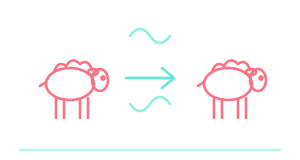
Videos
Vocabulary
cloneverb · band 6
to make a living thing that has exactly the same genes as another one
“Researchers first managed to clone a mammal from an adult body cell in the 1990s.”
Also: cloning (noun)
DNAnoun · band 6
the chemical code in living things that carries instructions for how they grow and work
“In cloning, scientists move the DNA from an ordinary body cell into an egg cell whose nucleus has been taken out.”
stem cellnoun + noun · band 7
a basic building block of the body that can develop into many different types of tissue
“Doctors already use stem cells from bone marrow to treat some blood cancers, and researchers hope they could one day help to repair damaged hearts.”
ethicaladjective · band 6
connected with what is morally right or wrong
“Many people believe that cloning humans would raise serious ethical issues.”
Also: ethics (noun), ethically (adverb)
Similar: moral
experimentnoun · band 6
a test carried out to see what happens or to check an idea
“In a laboratory experiment, researchers often repeat the same procedure many times to make sure the outcome is not just luck.”
Also: experimental (adjective), experimentation (noun)
genetically identicaladverb + adjective · band 7
having exactly the same genes as each other
“Twins that develop from a single fertilised egg are genetically identical, yet their personalities can differ.”
endangered speciesadjective + noun · band 6
kinds of living thing that are so few in number that they may soon disappear for ever
“Supporters argue that cloning could help to save endangered species with only a handful of animals left in the wild.”
Similar: threatened species
extinctadjective · band 6
no longer alive anywhere in the world
“Some people dream of recreating extinct animals, but the habitats they once lived in may have vanished.”
Also: extinction (noun)
genetic disorderadjective + noun · band 7
an illness caused by a fault in the body's built-in instructions, often passed on from parents
“In some fertility clinics, embryos can be tested to lower the chance that a couple's child is born with a serious genetic disorder.”
organ transplantnoun + noun · band 6
an operation in which a damaged body part is replaced by a healthy one from another person
“Waiting lists for organ transplants are often long, so some scientists are exploring ways to grow new kidneys or livers from a patient's own cells.”
human cloningadjective + noun · band 6
producing a baby whose genes are an exact copy of an existing person's
“Many countries have passed laws against human cloning, and most scientists believe it would be unsafe.”
tamper with natureverb phrase · band 7
to change the living world in ways that may cause harm
“Some people object to cloning on the grounds that it is wrong for scientists to tamper with nature.”
Similar: interfere with nature
slippery slopeidiom · band 7
a situation in which one small step makes bigger and worse steps more likely
“Opponents of cloning say that approving it for animals would put researchers on the slippery slope towards copying people.”
genetic diversityadjective + noun · band 7
the variety of inherited features within a group of living things
“Cloning produces identical copies, so a population made only of clones would have very little genetic diversity and could be wiped out by a single disease.”
unnaturaladjective · band 6
against the normal way that living things are born and grow
“Some people find the idea of making copies of animals deeply unnatural, even if the results are healthy.”
failure ratenoun + noun · band 7
the share of attempts that do not succeed
“In animal cloning the failure rate remains high, and most embryos never develop into healthy animals.”
medical advancesadjective + noun · band 6
important improvements in the way doctors care for sick people
“Better scanners, safer surgery and new vaccines are among the medical advances that have helped people live longer.”
animal welfarenoun + noun · band 7
how healthy and well treated creatures are, especially those kept or used by people
“Campaigners for animal welfare point out that cloned animals may suffer health problems.”
impose a ban onverb + noun · band 7
to forbid something officially by law
“Some campaigners have asked lawmakers to impose a ban on cloning pets, arguing that the money would be better spent on rescuing animals.”
Similar: prohibit
draw the lineidiom · band 7
to decide the point beyond which something must not be allowed
“Many people agree that scientists must draw the line at experiments that cause serious harm to living things.”
Speaking Part 1
- Which do you prefer, reading science articles or watching documentaries about nature?
- What do you like most about doing science experiments at school?
- Who usually talks about new scientific discoveries with you at home?
- Have you ever read an article about cloning?
- What do you know about cloning?
Speaking Part 2
You should say:
- when you watched or attended it
- what living thing was discussed
- what new facts you learned about it
and explain why this topic stayed in your memory.
Speaking Part 3
- Could expensive stem cell treatments create unfair gaps between wealthy families and poorer communities?
- Who ought to decide which genetic experiments are safe enough to carry out?
- In what ways do different cultures view the idea of copying animals or plants?
- What positive changes and hidden risks might come from cloning rare species?
- Why do medical researchers often support genetic research more strongly than the general public?
- How might older adults and teenagers react differently to news about cloned pets?
- Should schools teach students about the ethical sides of DNA research?
- Do you think cloning animals is acceptable?
- Where should scientists draw the line in research?
Writing Task 2
- Scientists can now clone animals, and some think human cloning may follow. Do the advantages of this outweigh the disadvantages?
- Opinion: Modern laboratories can now produce exact genetic copies of endangered animals. Some people believe this technology is the best way to save rare species from disappearing. Do you agree or disagree?
- Discuss both views: Some people think stem cell research should receive unlimited public funding because it can cure serious illnesses. Others worry that altering human cells crosses important ethical boundaries. Discuss both these views and share your own perspective.
- Advantages and disadvantages: In agriculture, some farms now raise genetically identical crops and livestock to increase food supply. Weigh the strengths and drawbacks of this farming practice, and state where you stand.
- Problem and solution: Many young people today believe false or exaggerated stories about human cloning that spread on social media. Why does this misunderstanding happen so easily, and how can schools and science communicators solve it?
- Two-part question: Some owners of companion animals now pay for laboratory cloning of their pets. What reasons might lie behind this choice, and do you see the rise of such cloning as a mainly beneficial or harmful development?